
At the intersection of queer storytelling and emotional intimacy lies a genre where women finally feel safe to fall in love.
By: Kassandra Lippincott
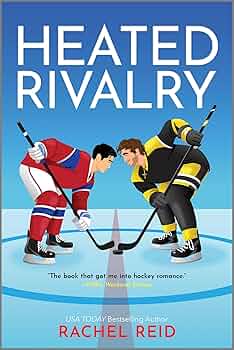
‘Heated Rivalry’ by Rachel Reid has taken over the Internet
What’s better than a hockey romance? A GAY hockey romance.
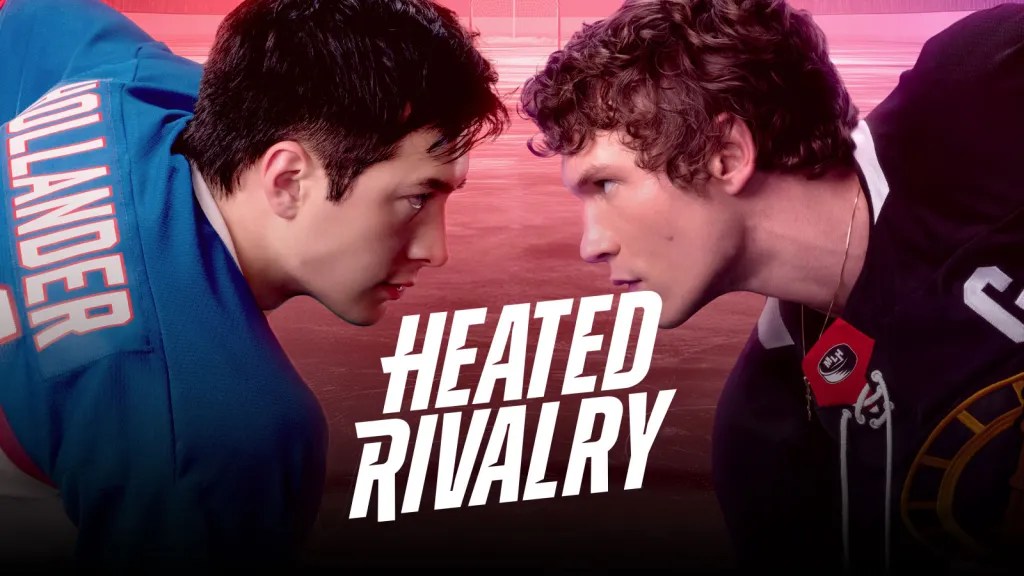
The internet has been in shambles for the past week, feasting over the live TV adaptation of Rachel Reid’s book series Game Changers produced by the Canadian Crave network. The series mainly focuses on Shane Hollander and Ilya Rozanov, two rival hockey players who have a secret love affair over the span of a decade.
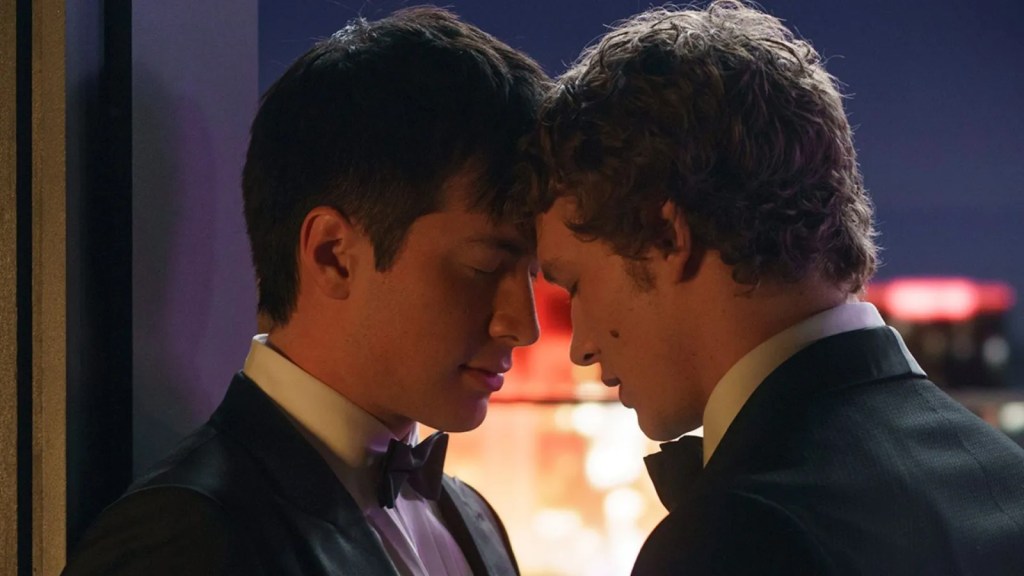
What’s interesting about this series isn’t just the romance, but the emotional depth of each character and the challenges they face playing a sport in a hyper-masculine environment. It brings up conversations of sexuality, identity, and the commonality of homophobia.
The series, written by a woman and primarily consumed by women, raises a question that has suddenly become mainstream: Why do women love M/M romance so much? Members of the queer community have wondered aloud why heterosexual women even consume this type of content.
As a woman who reads an obnoxious amount of books, including M/M romance, here are some of the core reasons this genre feels so uniquely safe and satisfying.
There’s no female character to project onto.
There are different kinds of readers: some slip into first person and experience the story as the main character, while others stay in third person, watching everything from a distance. In M/M romance, women get to remove themselves from the equation entirely. There’s no internal comparison, no gendered competition, no moment of “Would I have done that?” or “That would never be me.”
Traditional F/M romance often carries a built-in power dynamic, not always intentionally, but because it mirrors the expectations women have been raised with. Centuries of social conditioning about what women should be, how they should behave, and how desire should look inevitably shape the way female characters are written.
In M/M romance, that weight is gone. With no woman on the page to judge or defend, the reader doesn’t feel the need to critique her choices or measure herself against them.
And once that pressure to identify with the heroine disappears, something subtle shifts: the entire dynamic feels freer. And, for many women, safer.
The romantic dynamic feels safer.
Women have an entire spectrum of romance to choose from; everything from soft, fluffy love stories to the darkest, most intense dynamics. Romance is a space where we can explore things we’d never feel comfortable doing in reality. But the truth is, women grow up with an ingrained fear of men. We’re taught to be cautious from the moment we’re old enough to understand danger. We see the news. We hear the warnings. We learn to walk with keys between our fingers, keep eyes on our drinks, and stay alert even on the quickest route home.
No matter how careful we are, violence against women still happens every day, and that fear inevitably follows us into the stories we read.
In M/M romance, that power imbalance doesn’t exist in the same way. Even women who carry sexual trauma don’t see their fears reflected back at them; there’s no looming threat, no patriarchal dynamic baked into the tension. Instead, the emotional stakes feel lighter, the risks feel lower, and the reader is free to enjoy the build-up without flinching.
Because when something feels safe, it becomes easier to let yourself feel giddy. To sink into sweetness. To actually enjoy desire without bracing for danger.
And safety creates room for something we’re all starving for: emotional depth.
What’s better than one man’s emotional growth? TWO!
The stakes in M/M romance are often emotional rather than hierarchical. Unlike many F/M romances, where the growth is usually one-sided, M/M stories give readers access to two men evolving at the same time. Passion isn’t filtered through rigid gender roles, and desire isn’t framed around a woman’s body as the primary focal point. Sure, there’s physical attraction in gay romance, of course there is, but it’s not the only thing driving the characters. They’re navigating fear, shame, longing, identity, and the vulnerability that comes with finally allowing someone in.
In F/M romance, we’re repeatedly offered the same tropes: the “innocent, inexperienced girl,” the “he corrupts her” arc, and the idea that male dominance equals romance. After years of reading those dynamics, it becomes exhausting.
In M/M romance, both characters are allowed depth. Both get to soften. Both get to fear and fall. Watching them unravel emotionally and then stitch themselves back together through love gives readers twice the development and twice the payoff.
There is no “strong protective male + quirky female” equation. Instead, it’s two complex humans trying (and failing, and trying again) to be brave with each other.
You’re not battling thoughts like:
- “Would I feel safe?”
- “Would I feel too small?”
- “Would he overpower me?”
- “Would I feel objectified?”
Instead, the stakes shift into something sweeter, more intimate, more human:
- “Will they open up?”
- “Will they say how they feel?”
- “Will they finally kiss?”
- “Who breaks first?”
It’s the kind of romance women crave: one where connection and desire carry equal weight, and emotional vulnerability is the real climax.
MM romance isn’t just about the emotional payoff; it also carries cultural and queer significance that resonates deeply with women.
4. Queerness is not a plot device; it’s the entire HEART of the story
One of the biggest misconceptions about LGBTQ+ stories, especially those written by women, is that queerness is used as a quirky twist or an aesthetic. But in Heated Rivalry, queerness isn’t a trope or a subplot; it’s the emotional core of the narrative. It shapes every tension-filled moment between Shane and Ilya, every barrier they face, and every breakthrough they fight for.
Readers, queer and non-queer, connect with this because queerness inherently brings complexity: secrecy, longing, fear, freedom, shame, joy, chosen family, self-acceptance. These are universal emotional truths, but in queer stories, they’re amplified because the stakes are real. Their love does not exist in a vacuum; it exists in a world that has tried to shame or silence men like them.
Women gravitate toward this vulnerability for a very simple reason: we’ve spent our entire lives emotionally attuned to men who refuse to express themselves. In gay romance, we finally get to see men do the work; to be soft, scared, tender, confused, brave, messy. To unlearn the systems that try to harden them. To love without a script.
Heated Rivalry doesn’t just offer a romance:
It offers an emotional blueprint of what intimacy looks like when two people are allowed to shed performance and be fully human with each other.
At the end of the day, women aren’t reading M/M romance because it replaces something; we read it because it reveals something. It shows us what love can look like when stripped of fear, power imbalances, and gendered expectations. It reminds us that connection thrives in openness, communication, and vulnerability, the very things so many of us were taught to live without.
And maybe that’s why Heated Rivalry has taken over the internet: not just because Shane and Ilya are in love, but because they let us believe, even for a moment, that all of us deserve a love story that feels that safe, that tender, and that true.
Sources:
Most of the perspective for this article was gathered through social media, mainly TikTok and Instagram. Reading and reviewing various posts and comments on what others have to say about this topic.

 The Velvet Type
Leave a comment